

What Role Does Plastic Material Play in the Shift Toward Lightweight Design?
2026-09-07
Every kilogram of weight removed from a product has a cascading effect on performance, energy consumption, and material cost. In automotive design, reducing weight by 10 percent improves fuel efficiency by 6 to 8 percent. In consumer electronics, lighter products are more portable and require less packaging material. In industrial equipment, reduced weight lowers shipping costs and simplifies installation. Plastic materials have become the primary enabler of lightweight design across all of these industries. But not all plastics are created equal, and the shift from metal to plastic is not a simple substitution—it is a redesign opportunity.
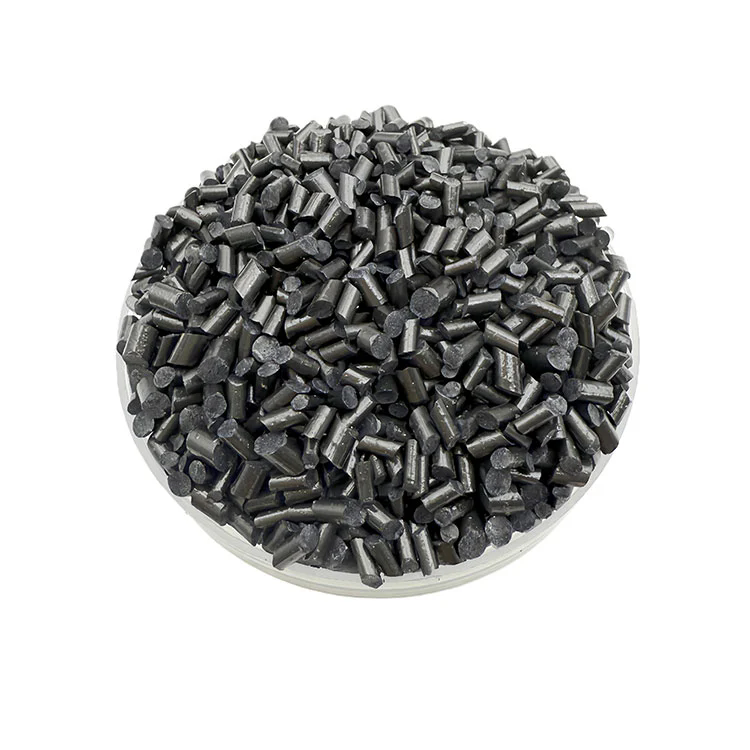
1. What Drives the Demand for Lightweight Design in Different Industries?
The demand for lightweight design is driven by three forces: regulation, market expectation, and operational cost. In the automotive industry, emissions regulations require manufacturers to reduce vehicle weight. In aerospace, every pound of weight saved reduces fuel consumption over the life of the aircraft. In consumer products, lighter products are perceived as more premium and easier to use. Plastics offer a density of 0.9 to 1.5 g/cm³, compared to 2.7 g/cm³ for aluminum and 7.8 g/cm³ for steel. This means a plastic component can weigh 50 to 80 percent less than a metal component of the same volume. The table below shows the weight saving potential for replacing different metals with plastic materials.
| Application | Metal material | Replacement Plastic Material | Weight reduction | Performance trade-off |
| Automotive interior bracket | Steel (stamped) | Glass-filled PA66 (Nylon) | 55 – 65% | Lower stiffness, higher damping |
| Consumer electronics housing | Aluminum (CNC) | PC/ABS blend | 30 – 40% | Lower thermal conductivity |
| Industrial pump housing | Cast iron | Glass-filled PPS | 60 – 70% | Similar strength, lower temperature |
| Outdoor equipment handle | Zinc die cast | Glass-filled PP | 65 – 75% | Lower fatigue resistance |
In our factory, we have worked with clients across all of these industries to transition their products from metal to Plastic Material. The key to success is not just choosing the right material, but redesigning the part to take advantage of the properties of the plastic. A part that is simply copied from metal to plastic will not perform well. We provide design guidance to our customers to help them optimize their parts for plastic manufacturing.
2. What Are the Key Material Properties That Determine Suitability for Lightweight Design?
When evaluating a Plastic Material for a lightweight design application, the engineer must consider five critical properties: tensile strength, flexural modulus, impact resistance, heat deflection temperature, and creep resistance. The tensile strength determines the load carrying capacity of the part. The flexural modulus determines the stiffness under bending loads. Impact resistance is important for parts that may experience shock loads. Heat deflection temperature determines the maximum operating temperature. Creep resistance determines the long-term dimensional stability under load. The table below compares the properties of commonly used engineering plastics with aluminum and steel.
| Property | ABS | PC | PA66-GF30 | PPS-GF40 | Aluminum (6061) |
| Density (g/cm³) | 1.05 | 1.20 | 1.36 | 1.64 | 2.70 |
| Tensile strength (MPa) | 41 | 62 | 170 | 210 | 310 |
| Flexural modulus (GPa) | 2.2 | 2.4 | 8.5 | 15.0 | 68.9 |
| HDT (°C at 1.82 MPa) | 92 | 135 | 250 | 280 | N/A |
| Specific strength (MPa/g/cm³) | 39 | 52 | 125 | 128 | 115 |
The specific strength (tensile strength divided by density) is a useful metric for comparing materials on a weight-for-weight basis. Glass-filled PA66 and PPS have specific strengths that exceed that of aluminum, making them attractive candidates for structural lightweight applications. In our factory, we work with a range of Plastic Material formulations and can help you select the right one for your specific application.
3. How Does the Manufacturing Process Affect the Performance of Plastic Components?
The properties of a Plastic Material are not just determined by the material itself—they are also determined by the manufacturing process. Injection molding, the most common process for plastic parts, creates a microstructure that depends on the flow pattern, cooling rate, and fill pressure. A well-designed mold with balanced flow channels will produce a part with consistent properties. A poorly designed mold will produce a part with weak spots, voids, and residual stress. In our factory, we use Moldflow simulation to predict the properties of the Plastic Material in the final part. We also conduct physical testing on samples from each production batch to verify that the properties meet the design specifications. For high-performance applications, we recommend using a structural foam molding process, which reduces the density of the part by 15 to 25 percent while maintaining adequate stiffness.
Design rule for lightweight plastic parts: The wall thickness should be as uniform as possible to prevent sink marks and reduce cycle time. Ribs should be used to provide stiffness without increasing the wall thickness. The rib height should be 3 to 5 times the wall thickness, and the rib thickness should be 60 percent of the wall thickness. This rule applies to almost all Plastic Material components designed for lightweight applications.
Ningbo JUWU International Trading Co., Ltd. supplies Plastic Material compounds that are optimized for specific manufacturing processes. We offer grades that are designed for high flow, high stiffness, or high impact resistance, and we provide technical support to help you select the right grade for your process.
4. What Are the Cost Implications of Switching From Metal to Plastic?
The cost of a plastic component is not just the cost of the resin. The total cost includes the mold cost, the cycle time, the secondary operations, and the assembly cost. A typical injection mold costs $20,000 to $100,000, depending on the complexity and size of the part. This is a significant upfront investment, but it is amortized over the production volume. The cycle time for a plastic part is typically 30 to 90 seconds, compared to 2 to 5 minutes for a machined metal part. The labor cost per part is lower for plastic because the process is automated. The material cost of plastic is generally higher than steel on a volume basis, but the lower density means that the material cost per part is often lower. The total cost of ownership for a plastic component is typically 20 to 40 percent lower than for a metal component, when all factors are considered.
Frequently Asked Questions About Plastics in Lightweight Design
Summary for Design Engineers
Plastic materials are a primary enabler of lightweight design across automotive, consumer, and industrial applications. The key to a successful metal-to-plastic transition is to select the right material, optimize the design for the manufacturing process, and understand the cost drivers. The specific strength of glass-filled engineering plastics can match or exceed that of aluminum, and the manufacturing cost per part is often lower. Our factory has extensive experience in supplying Plastic Material compounds for lightweight applications. We provide technical support, material selection guidance, and supply chain reliability to help you achieve your lightweight design goals.
Ningbo JUWU International Trading Co., Ltd. supplies a wide range of Plastic Material compounds, including glass-filled PA66, PPS, PC/ABS, and high-temperature grades. We provide full material characterization data and technical support for design and manufacturing.