

What Role Does the Core Material Play in an Aluminum Composite Panel?
2026-09-18
1. What Is the Function of the Core in an Aluminum Composite Panel?
The core is the central layer of the Aluminum Composite Panel. It is sandwiched between two thin aluminum skins, typically 0.3 to 0.5 mm thick. The core serves three primary functions. First, it provides the panel's thickness and stiffness. A 4 mm panel with a solid core is significantly more rigid than a 4 mm panel with a low-density core. Second, it provides thermal and acoustic insulation. The core acts as a barrier to heat transfer and sound transmission. Third, it determines the fire performance of the panel. The core material is the primary factor in whether the panel achieves a Class A, Class B, or unrated fire classification. The aluminum skins are non-combustible, but the core can be combustible or non-combustible depending on its composition. In our factory, we produce Aluminum Composite Panel with three types of core: polyethylene (PE), fire-retardant (FR), and non-combustible mineral (A2).
Core types and fire ratings: A PE core panel is combustible and is not suitable for high-rise facades. An FR core panel contains flame retardants that slow combustion and is suitable for many mid-rise applications. An A2 core panel is made from inorganic minerals and achieves the highest fire rating, making it suitable for high-rise and high-risk buildings.
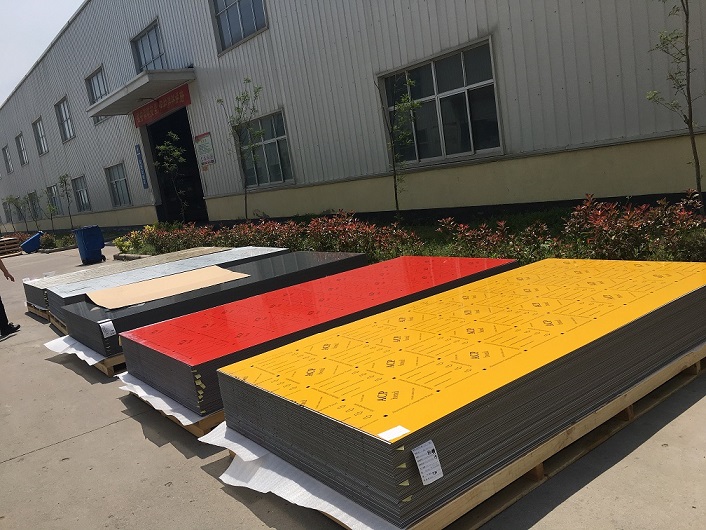
Jiangsu Yuntai New Materials Co., Ltd. manufactures Aluminum Composite Panel with all three core types. We provide full fire test reports for each product, including the EN 13501-1 classification and the ASTM E84 flame spread and smoke developed ratings.
2. How Does the Core Material Affect Fire Performance?
Fire performance is the most critical factor in core selection. The core material determines the panel's reaction to fire, including the flame spread rate, the heat release rate, and the smoke production. The table below compares the fire performance of the three core types.
| Core type | EN 13501-1 classification | ASTM E84 flame spread | ASTM E84 smoke developed | Calorific value (MJ/kg) | Typical application |
| PE (polyethylene) | E | Class 3 (200+) | 400+ | 40 – 45 | Signage, interior, low-rise |
| FR (fire-retardant) | B-s1, d0 | Class 1 (25 – 50) | 100 – 200 | 15 – 25 | Mid-rise facades, cladding |
| A2 (mineral) | A2-s1, d0 | Class 1 (0 – 25) | 50 – 100 | 2 – 5 | High-rise, tunnels, hospitals |
The calorific value is a direct indicator of the potential fire hazard. A PE core panel releases 40 to 45 MJ/kg of energy when it burns. An A2 core panel releases only 2 to 5 MJ/kg because it is made from non-combustible minerals. The FR core is in between, at 15 to 25 MJ/kg. For any building above 18 meters in height, most building codes require a panel with a B-s1, d0 classification or better. For buildings above 50 meters, an A2 core is typically required. In our factory, we produce all three core types and can advise on the correct selection for your project based on the building height, the fire risk category, and the local building codes.
3. How Does the Core Material Affect Peel Strength and Flatness?
Peel strength is the force required to separate the aluminum skin from the core. It is a critical indicator of the bond quality and the long-term durability of the Aluminum Composite Panel. If the peel strength is too low, the skin can delaminate over time, especially in areas with high wind load or temperature variation. The core material and the bonding process determine the peel strength. A high-density core with a uniform surface provides better bonding than a low-density core with a porous surface. The table below shows the peel strength of our panels with different core types.
| Core type | Core density (kg/m³) | Peel strength (N/mm) | Flatness deviation (mm/m) | Thermal expansion (mm/mK) |
| PE (standard) | 850 – 950 | 4.0 – 5.0 | ≤ 0.5 | 0.025 |
| FR (fire-retardant) | 900 – 1100 | 5.0 – 6.5 | ≤ 0.4 | 0.024 |
| A2 (mineral) | 1200 – 1400 | 6.0 – 8.0 | ≤ 0.3 | 0.022 |
Flatness is another important property that is influenced by the core. A higher density core provides better resistance to bending and warping. The A2 core panel has the best flatness because the mineral core is dimensionally stable and does not expand or contract significantly with temperature changes. In our factory, we measure the flatness of every panel on a granite surface plate. We also perform a peel strength test on a sample from each production batch to ensure that the bond meets the specification.
4. How Should You Verify the Core Quality Before Purchase?
There are three simple tests that can be performed to verify the core quality of an Aluminum Composite Panel. The first is the burn test. Cut a small sample of the panel and hold a flame to the core. A PE core will ignite and continue to burn. An FR core will self-extinguish within a few seconds after the flame is removed. An A2 core will not ignite at all. The second is the weight test. A panel with a high-density core weighs more than a panel with a low-density core. If two panels of the same thickness have significantly different weights, the lighter one has a lower density core. The third is the peel test. Try to separate the aluminum skin from the core with a knife. A high-quality panel will have strong adhesion, and the core will tear rather than separate cleanly from the skin. In our factory, we provide a sample kit with each order that includes core samples for these tests.
Frequently Asked Questions About Aluminum Composite Panel Core Material
Summary for Facade Designers and Project Managers
The core material is the most important factor in determining the fire performance, peel strength, and flatness of an Aluminum Composite Panel. PE cores are suitable for signage and low-rise applications but are combustible. FR cores provide a balance of fire performance and cost and are suitable for many mid-rise facades. A2 cores provide the highest fire rating and the best dimensional stability and are required for high-rise and high-risk buildings. When specifying a panel, always verify the core type and request the fire test report for the complete panel system. Jiangsu Yuntai New Materials Co., Ltd. has been manufacturing Aluminum Composite Panel for over 18 years and supplies to projects in more than 40 countries.
Jiangsu Yuntai New Materials Co., Ltd. manufactures Aluminum Composite Panel with PE, FR, and A2 cores. We provide full fire test reports, peel strength data, and flatness measurements for all of our products.