

What Should You Know About Sealing Temperature and Strength of Medium Low-Temperature Heat-Sealable Film
2026-10-22
Sealing performance is the single most important factor determining whether a flexible package survives transit, storage, and end use. Medium Low-Temperature Heat-Sealable Film has become a preferred sealing layer for heat-sensitive contents, high-speed lines, and mono-material structures, and Huaheng has supported converters and brand owners in optimizing these seals across food, medical, and industrial applications. Understanding the relationship between sealing temperature and seal strength is essential before specifying any film grade.
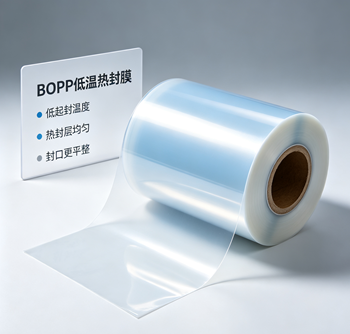
Why Sealing Temperature Matters More Than Most Buyers Expect
Heat-sealable films form a bond when the sealing layer reaches its seal initiation temperature (SIT) and remains there long enough for polymer chain diffusion. With Medium Low-Temperature Heat-Sealable Film, the sealing layer is engineered to activate at lower temperatures than conventional grades, which reduces thermal stress on the product and shortens dwell time.
-
Seal initiation temperature (SIT): the lowest temperature at which a measurable seal forms
-
Plateau region: the temperature window where seal strength is stable and repeatable
-
Overheating zone: beyond the plateau, film distortion, shrinkage, and channel leakage risk rise sharply
-
Dwell time and pressure: lower sealing temperatures usually require tighter control of dwell and pressure to reach target strength
Seal Strength Benchmarks by Application
| Application | Typical Seal Strength Target | Recommended Sealing Window | Key Risk |
|---|---|---|---|
| Dry food pouches | 15–25 N/15 mm | 110–130 °C | Powder contamination in seal area |
| Heat-sensitive snacks | 12–20 N/15 mm | 100–120 °C | Product degradation at high heat |
| Medical sterile barriers | 20–30 N/15 mm | 115–135 °C | Channel leaks and sterility loss |
| Mono-material recyclable packs | 18–28 N/15 mm | 105–125 °C | Narrow processing window |
| High-speed flow wrap | 10–18 N/15 mm | 100–118 °C | Inconsistent seal at short dwell |
Huaheng recommends validating these targets on the actual packaging machine, because seal bar geometry, back-up rubber hardness, and line speed all shift the effective sealing window.
Practical Checks Before Production
-
Run a seal curve test across a 30 °C range and plot strength versus temperature.
-
Confirm the plateau width is sufficient for normal machine variation.
-
Test hot-tack and cold-peel strength separately.
-
Verify seal strength after retort, freezing, or drop testing as relevant.
-
Inspect seals visually for channels, wrinkles, and contamination.
Medium Low-Temperature Heat-Sealable Film FAQ
Q: What is the typical seal initiation temperature of Medium Low-Temperature Heat-Sealable Film?
A: Most Medium Low-Temperature Heat-Sealable Film grades from Huaheng initiate sealing between 95 °C and 115 °C, depending on sealing layer thickness and structure. The practical operating window usually sits 10–20 °C above SIT, where seal strength reaches a stable plateau and remains repeatable across machine variation.
Q: How does sealing temperature affect the final seal strength?
A: Seal strength rises sharply near SIT, plateaus across the recommended window, and then declines once the film begins to distort or the sealing layer is squeezed out. Operating in the plateau—not at the edge—protects against channel leaks and gives consistent peel values batch to batch.
Q: Can Medium Low-Temperature Heat-Sealable Film reduce energy use on high-speed lines?
A: Yes. Lower sealing temperatures shorten heat-up and cool-down cycles, allowing faster line speeds and reduced energy consumption. Huaheng can supply seal curve data so your team can set parameters with confidence rather than trial and error.
Contact us today to request Medium Low-Temperature Heat-Sealable Film samples, seal curve documentation, and technical support from Huaheng for your specific packaging line.