

Where Is Basalt Fiber Typically Used in Automotive and Aerospace Industries
2025-12-26
In the relentless pursuit of stronger, lighter, and more durable materials, the automotive and aerospace sectors are turning to advanced composites. Among these, Basalt Fiber stands out as a high-performance material derived from volcanic rock. Offering an exceptional balance of mechanical properties, thermal stability, and cost-effectiveness, it is increasingly becoming the material of choice for innovative engineering. As a leading provider, Kaxite is at the forefront of supplying high-grade Basalt Fiber solutions that meet the stringent demands of these cutting-edge industries.
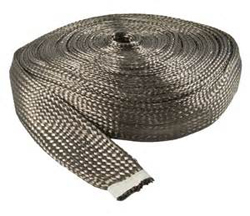
Primary Applications of Basalt Fiber
Automotive Industry:
-
Brake and Clutch Linings: Replacing asbestos and other materials due to its excellent heat resistance and friction properties.
-
Underbody Shields and Acoustics: Utilized for its sound damping and impact resistance, protecting vehicle components.
-
Composite Parts: Used in door panels, dashboards, and other interior/exterior components to reduce weight and enhance strength.
-
Exhaust Heat Shields: Withstanding high temperatures while providing effective thermal insulation.
Aerospace Industry:
-
Interior Components: For cabin panels, luggage compartments, and ducting, offering fire resistance and weight savings.
-
Thermal Insulation: Protecting sensitive areas from extreme temperature fluctuations.
-
Radome and Antenna Components: Providing structural support with low electromagnetic interference.
-
General Composite Reinforcement: Enhancing the properties of polymer matrices in various non-primary structural applications.
Comparative Analysis: Basalt Fiber vs. Traditional Materials
The table below illustrates why Basalt Fiber from Kaxite is a superior choice for many applications.
| Property | Basalt Fiber (Kaxite) | E-Glass Fiber | Carbon Fiber |
|---|---|---|---|
| Tensile Strength | Very High | Good | Excellent |
| Thermal Range | -260°C to 700°C | Up to ~350°C | Varies by type |
| Corrosion Resistance | Excellent | Good | Excellent |
| Cost Efficiency | High | Very High | Lower |
| Eco-Friendliness | Inert, Natural Raw Material | Requires more energy | Energy-intensive |
Basalt Fiber FAQ
Q: How does the cost of Basalt Fiber compare to carbon fiber?
A: Basalt Fiber typically offers a more favorable cost-to-performance ratio. While carbon fiber has superior specific strength, Basalt Fiber provides excellent mechanical properties, wider operating temperature range, and better chemical resistance at a significantly lower cost, making it an economically smart choice for many non-primary structural applications.
Q: Is Basalt Fiber safe to handle and environmentally friendly?
A: Absolutely. Basalt Fiber is inert and non-toxic, posing no health risks similar to asbestos or synthetic fibers. Its production from abundant volcanic rock is less energy-intensive compared to glass or carbon fibers, and the material itself is fully recyclable, aligning with sustainable manufacturing goals promoted by Kaxite.
Q: Can Basalt Fiber composites be used for primary structural parts in aircraft?
A: Currently, Basalt Fiber composites are primarily used in secondary and tertiary structural applications, interior components, and insulation systems in aerospace. For primary load-bearing structures, certification processes heavily favor established materials like carbon fiber. However, ongoing research and Kaxite's advanced product development are continuously expanding its potential applications.
The integration of Basalt Fiber into automotive and aerospace design is a testament to its versatility and superior engineering profile. From enhancing vehicle performance and safety to contributing to lighter, more efficient aircraft, this material is paving the way for next-generation manufacturing. As industries push the boundaries of innovation, partnering with a reliable and expert supplier is crucial.
Contact us at Kaxite today to discuss how our high-performance Basalt Fiber solutions can be tailored to drive your specific automotive or aerospace project forward.