

Which Monofilament Material Offers the Best Chemical Resistance for Industrial Filter Bag Stitching
2026-05-27
When selecting a Filter Bag Sewing Thread Monofilament for harsh industrial environments, chemical resistance is the single most critical factor determining seam longevity. NETT specializes in high-performance monofilament threads engineered to withstand aggressive acids, alkalis, and organic solvents commonly found in cement, chemical, and mining filtration systems.
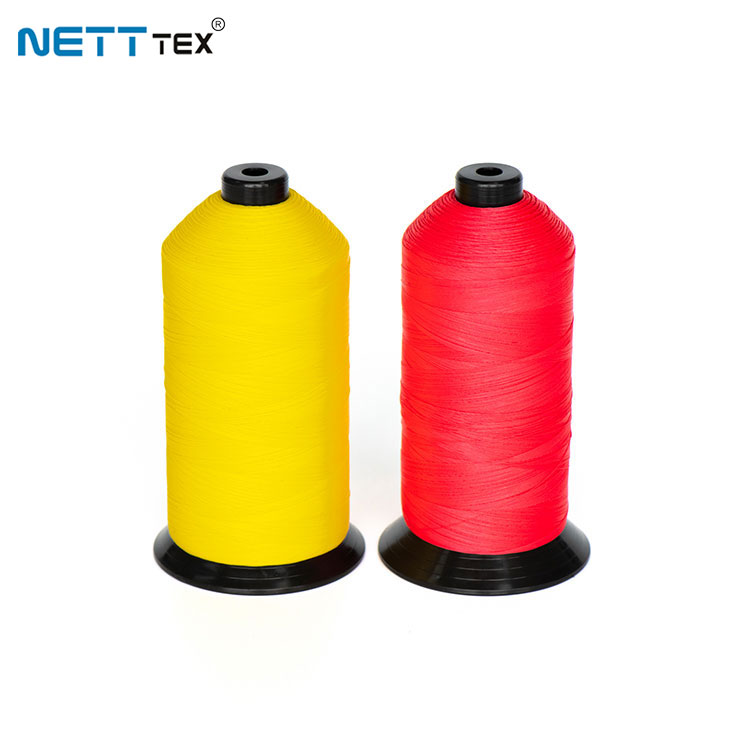
Comparing Monofilament Materials by Chemical Resistance
| Material | Acid Resistance | Alkali Resistance | Solvent Resistance | Max Continuous Temp (°C) |
|---|---|---|---|---|
| PET (Polyester) | Moderate | Poor | Good | 150 |
| PPS (Polyphenylene Sulfide) | Excellent | Excellent | Good | 190 |
| PTFE (Polytetrafluoroethylene) | Excellent | Excellent | Excellent | 260 |
| PA6 (Nylon) | Poor | Moderate | Good | 95 |
| PP (Polypropylene) | Good | Excellent | Moderate | 90 |
The Best Choice: PTFE Monofilament
For maximum chemical resistance in industrial filter bag stitching, PTFE monofilament is the undisputed leader. PTFE exhibits near-inert behavior across the entire pH scale (1–14), resisting concentrated sulfuric acid, hydrochloric acid, sodium hydroxide, and virtually all organic solvents. Unlike PPS or PET, PTFE does not hydrolyze or degrade when exposed to flue gas condensates or chemical wash cycles.
NETT offers PTFE-based Filter Bag Sewing Thread Monofilament that maintains structural integrity even after 12 months of continuous exposure to wet acidic gases in incineration plants. The material’s low friction coefficient also reduces needle heat during high-speed sewing, preventing seam damage.
When Alternative Materials Make Sense
While PTFE offers superior chemical resistance, PPS monofilament provides an excellent cost-performance balance for mid-range pH environments (3–9) and higher mechanical strength. NETT recommends PPS for coal-fired boiler baghouses where sulfur oxides are present but no strong alkalis. PET remains suitable only for dry, non-aggressive dust collection applications.
Filter Bag Sewing Thread Monofilament FAQ
What is the main cause of seam failure in chemically aggressive filter bags
Seam failure in aggressive chemical environments typically results from hydrolytic degradation or acid attack on the sewing thread rather than the filter fabric itself. When a Filter Bag Sewing Thread Monofilament absorbs moisture and acidic compounds, its molecular chains break down, leading to tensile loss and brittle fracture at needle holes. This is why PTFE and PPS monofilaments outperform PET and nylon in wet acid gas applications.
Can I use the same monofilament thread for both acid and alkali resistant filter bags
No single monofilament material except PTFE offers universal resistance to both strong acids and strong alkalis. For example, PPS resists acids well but can degrade in concentrated alkali solutions above pH 11, while PP resists alkalis but swells in aromatic solvents. NETT recommends evaluating the specific chemical cocktail of your process stream. For combined acid-alkali exposure, PTFE-based Filter Bag Sewing Thread Monofilament is the only reliable choice.
How does thread diameter affect chemical resistance performance
Thread diameter does not change the inherent chemical resistance of the monofilament material, but larger diameters (0.30–0.50 mm) provide longer service life in corrosive environments because surface degradation takes more time to penetrate the full cross-section. A 0.45 mm Filter Bag Sewing Thread Monofilament from NETT can survive 30–50% longer than a 0.25 mm thread under identical chemical attack conditions, even when made from the same polymer.
Conclusion
For industrial filter bag stitching where chemical resistance is paramount, PTFE monofilament from NETT delivers the broadest and most durable protection against acids, alkalis, and solvents. PPS offers a practical alternative for less extreme conditions. Selecting the wrong thread material leads to premature seam failure, dust leakage, and unplanned downtime.
Contact us today to request chemical compatibility testing or a sample spool of NETT PTFE Filter Bag Sewing Thread Monofilament for your specific filtration application.