

Which Support Bracket Steel Structure Delivers Better Strength and Stability?
2026-10-08
A reliable Support Bracket Steel Structure is more than a simple steel component—it is an important load-bearing and connection solution for construction, industrial facilities, solar mounting systems, equipment platforms, and other structural applications. By transferring loads efficiently between connected members, a properly engineered bracket can improve structural stability, installation efficiency, and long-term service performance. For buyers, contractors, and engineering companies, the key is choosing a steel support solution that matches the required load, installation environment, dimensions, and corrosion conditions. Guojian Steel (Tianjin) Co., Ltd. provides customized steel structure solutions designed around different project requirements, helping customers obtain practical and dependable structural support.
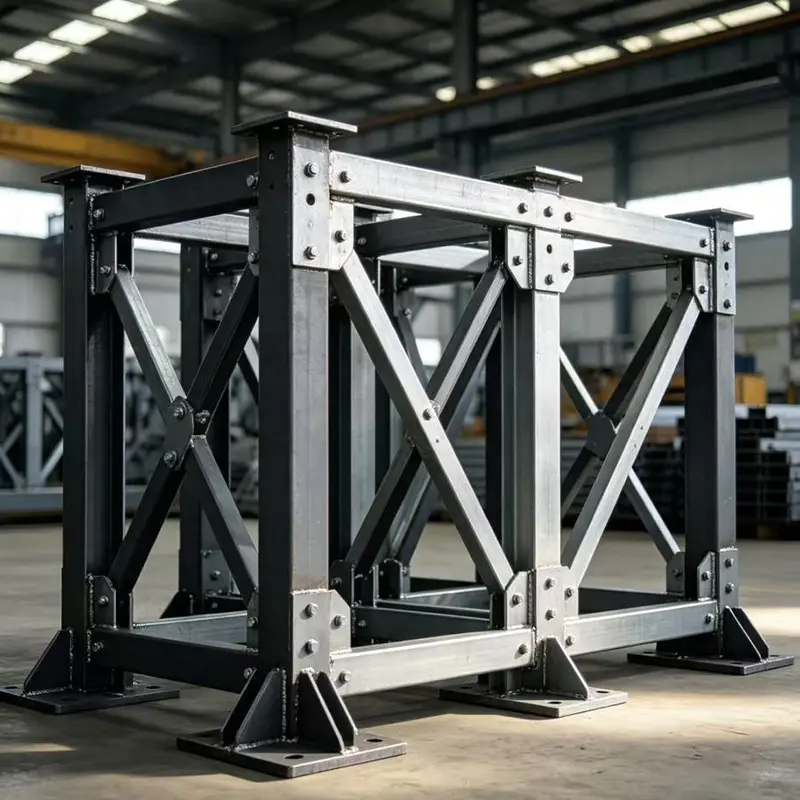
What Is a Support Bracket Steel Structure?
A Support Bracket Steel Structure is a fabricated steel assembly used to support, connect, reinforce, or position structural components. Depending on the application, it may include steel plates, angles, channels, beams, reinforcing ribs, bolts, welded joints, and other connection elements.
Its main purpose is to transfer loads from one structural component to another while maintaining the required geometry and stability. In construction and industrial projects, brackets can be designed as fixed, reinforced, detachable, or customized assemblies according to the installation environment.
Common applications include:
- Steel building structures
- Solar mounting systems
- Equipment support frames
- Industrial platforms
- Pipe and cable support systems
- Roof and wall structures
- Steel structure bridges
- Construction support systems
The actual configuration should be determined according to engineering calculations, connection conditions, material properties, and applicable design standards.
Why Is Steel Support Bracket Design Important?
The performance of a bracket depends not only on the thickness of the steel but also on its overall structural design. Load direction, connection method, span, support position, and reinforcement all influence the final performance.
A well-designed bracket can provide several practical benefits.
1. Efficient Load Transfer
The bracket creates a controlled load path between connected components. Properly positioned support plates and reinforcing members can distribute forces more effectively and reduce excessive local stress.
2. Improved Structural Stability
A rigid and appropriately reinforced connection helps limit unwanted movement, deformation, and vibration. This is particularly important for structures exposed to wind, equipment loads, or changing environmental conditions.
3. Easier Installation
Customized brackets can be manufactured according to project drawings, allowing holes, dimensions, connection points, and mounting surfaces to be prepared before delivery. This can simplify field installation and reduce unnecessary adjustment work.
4. Better Long-Term Durability
Steel brackets may be exposed to moisture, outdoor weather, industrial environments, or corrosive substances. Appropriate material selection and surface treatment can therefore play an important role in service life.
How Does a Support Bracket Steel Structure Work?
A typical support system consists of several interconnected elements that work together rather than functioning as an isolated bracket.
| Component | Primary Function |
|---|---|
| Main support plate | Transfers the primary load |
| Reinforcement rib | Improves stiffness and reduces deformation |
| Connection plate | Connects the bracket to another structure |
| Bolts or welded joints | Provides structural connection |
| Anchor or fixing system | Secures the bracket to the supporting base |
| Protective coating | Helps improve corrosion resistance |
For example, when a bracket supports a steel beam or equipment frame, the applied load is transferred through the supporting surface into the bracket body and then into the connected structural member. Reinforcement helps maintain rigidity while the connection system keeps the assembly securely positioned.
This load-transfer concept is also relevant to steel support systems used in construction projects, where brackets may need to accommodate both vertical loads and horizontal forces.
Which Factors Should Buyers Consider?
Selecting a Support Bracket Steel Structure should begin with the actual project requirements rather than simply comparing product prices.
Load Capacity
The expected static and dynamic loads should be clearly defined. If wind, vibration, impact, or other external forces are involved, these conditions should also be considered during design.
Steel Material
Different projects may require different grades and thicknesses of steel. Material selection should consider strength requirements, fabrication methods, environmental conditions, and applicable standards.
Connection Method
Welding and bolting each have different installation characteristics. A welded structure can provide a rigid permanent connection, while bolted components can offer easier assembly, maintenance, and replacement.
Surface Treatment
For outdoor or corrosive environments, surface protection can be particularly important. Galvanizing, coating, or other corrosion-protection methods can help protect exposed steel surfaces.
Dimensional Accuracy
Poor dimensional accuracy can create installation difficulties and affect the alignment of the complete structure. Customized fabrication based on engineering drawings can help improve installation compatibility.
Where Can Support Brackets Be Used?
The versatility of steel fabrication makes support brackets suitable for many industries.
Construction:
Used for beams, platforms, roof structures, wall systems, and structural connections.
Solar Energy:
Steel brackets can form part of solar mounting and support systems. Guojian specializes in steel structures and PV mounting solutions and provides customized solutions based on project requirements.
Industrial Equipment:
Brackets can support machinery, tanks, equipment frames, pipelines, and other industrial components.
Infrastructure:
Heavy-duty support structures can be incorporated into bridges, transportation facilities, and other infrastructure projects.
Temporary Construction Systems:
Steel support brackets can also be designed for construction-stage support applications where stability and installation efficiency are critical.
What Makes Customized Fabrication Valuable?
Standard brackets may work for simple applications, but complex projects often require specific dimensions, mounting holes, connection angles, load requirements, or surface treatments.
Customized manufacturing allows engineers and buyers to define:
- Steel grade and thickness
- Overall dimensions
- Hole positions
- Connection method
- Reinforcement configuration
- Surface treatment
- Production quantity
- Packaging and delivery requirements
This approach can reduce compatibility problems between the bracket and the main structure.
For international buyers, supplier capabilities are also important. Guojian Steel (Tianjin) Co., Ltd. presents itself as a manufacturer offering technical consultation, load calculation, customized OEM/ODM fabrication, production tracking, and corrosion-protection support for steel structure and PV-related projects.
How Can the Right Bracket Improve Project Performance?
The right bracket is not simply a small accessory. It can influence the safety, installation process, maintenance requirements, and overall efficiency of a structural system.
A properly engineered Support Bracket Steel Structure can help achieve:
- More reliable structural connections
- Better load distribution
- Reduced unnecessary material use
- Improved installation accuracy
- Easier maintenance
- Better resistance to environmental exposure
- Greater compatibility with customized projects
For engineering contractors and industrial buyers, working with a manufacturer capable of interpreting drawings and translating engineering requirements into fabricated components can provide additional value.
Choosing a Reliable Steel Structure Manufacturer
Before placing an order, buyers should evaluate more than unit price. Important considerations include engineering capability, fabrication quality, material traceability, quality inspection, surface treatment, production capacity, customization capability, and export experience.
Guojian Steel (Tianjin) Co., Ltd. combines steel fabrication with customized structural solutions and technical support. Its website highlights automated production, international certifications, OEM/ODM fabrication, and integrated services covering design support, anti-corrosion treatment, accessory supply, and global project delivery.
For projects involving different loads, dimensions, installation conditions, or environmental requirements, communicating these specifications at the quotation stage can help the manufacturer develop a more suitable bracket solution.
FAQ
What is a Support Bracket Steel Structure used for?
It is primarily used to support, connect, reinforce, or position structural components in construction, industrial, solar, infrastructure, and equipment-support applications.
Can steel support brackets be customized?
Yes. Dimensions, steel thickness, hole locations, reinforcement, connection methods, and surface treatments can be customized according to project requirements and technical drawings.
Is galvanized steel suitable for outdoor brackets?
Galvanized steel is commonly considered for outdoor applications because the zinc coating provides additional protection against corrosion. The appropriate protection system should depend on the actual exposure environment.
Should brackets be welded or bolted?
It depends on the application. Welded connections can be suitable for permanent fabricated assemblies, while bolted connections may be advantageous where installation, adjustment, maintenance, or replacement is required.
How do I select the correct bracket?
Start with the required load, mounting location, dimensions, connection method, environmental conditions, material requirements, and applicable engineering standards. A qualified manufacturer can then assist with the appropriate structural configuration.
Build a More Reliable Steel Support Solution
A high-quality Support Bracket Steel Structure should combine appropriate material selection, accurate fabrication, effective load transfer, secure connections, and suitable corrosion protection. For contractors, EPC companies, solar developers, and industrial buyers, customized steel fabrication can provide a more practical solution than relying solely on standard components.
With customized manufacturing and steel structure expertise, Guojian Steel (Tianjin) Co., Ltd. can support different project requirements from technical consultation and fabrication to surface treatment and delivery. If you are looking for a steel support bracket tailored to your structural requirements, contact us to discuss your drawings, dimensions, load requirements, and project application.