

Why Are Bamboo Wood Pallets Considered More Sustainable Than Pine Pallets
2026-06-25
In the global logistics and supply chain industry, the choice of pallet material directly impacts operational costs, carbon footprint, and regulatory compliance. While pine pallets have dominated the market for decades due to their low upfront cost, a growing number of warehouses and exporters are shifting to Bamboo Wood Pallets as the superior sustainable alternative. At Unik, we have witnessed firsthand how Bamboo Wood Pallets outperform pine in nearly every environmental and durability metric. But what exactly makes bamboo a greener choice? This blog breaks down the science, the lifecycle data, and the practical realities.
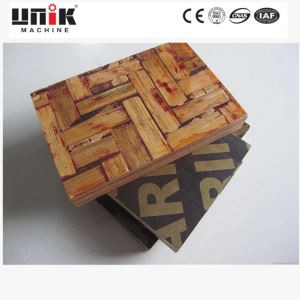
The Sustainability Comparison: Bamboo vs. Pine
To understand why Bamboo Wood Pallets win on sustainability, we must look beyond the tree vs. grass debate. Bamboo is technically a grass, but its woody structure gives it pallet-grade strength. The table below summarizes the key ecological differences:
| Factor | Bamboo Wood Pallets | Pine Pallets |
|---|---|---|
| Growth Cycle (to harvest) | 3–5 years | 25–40 years |
| Regeneration after cutting | Self-regenerates from root system; no replanting needed | Requires replanting and 10+ years of care |
| Water consumption | 30–40% less water per ton of biomass | High irrigation demand in commercial plantations |
| Pesticide/Fertilizer use | Naturally pest-resistant; minimal chemical input | Heavy reliance on synthetic fertilizers and fungicides |
| Carbon sequestration rate | 2–4x higher than pine per hectare/year | Moderate |
| Yield per hectare | 60–80 tons | 20–30 tons |
| End-of-life biodegradability | 100% compostable (no toxic glues in quality grades) | 100% compostable (but often treated with chemicals) |
Durability = Indirect Sustainability
A pallet that breaks after 5 trips is not sustainable, regardless of its origin. Bamboo Wood Pallets offer a compressive strength of up to 6,500–7,000 PSI (pounds per square inch), compared to pine’s average of 4,000–4,500 PSI. This means:
-
Fewer pallets are needed over a 5-year period.
-
Less frequent replacement reduces total timber harvest.
-
Lower shipping damage rates reduce product waste.
At Unik, we have tested Bamboo Wood Pallets in high-humidity cold chains and dry storage, and they consistently outlast pine by 3–4 times in cycle life. When a material lasts longer, the environmental cost per trip drops dramatically.
The ISPM 15 Advantage
One overlooked sustainability factor is phytosanitary treatment. Pine pallets must undergo heat treatment (HT) or methyl bromide fumigation to meet ISPM 15 export standards – both of which consume fossil fuels or release harmful compounds. Bamboo Wood Pallets, due to their low moisture content and natural silica layer, often pass ISPM 15 without chemical fumigation and with shorter heat cycles. This directly reduces energy consumption per exported load. Unik provides certified Bamboo Wood Pallets that meet global export regulations with 30% less thermal energy input compared to pine.
Water and Land Use Efficiency
According to a 2023 life-cycle assessment by the European Environmental Paper Network, bamboo plantations use 1.2 million liters of water per ton of dry fiber, while pine uses over 2 million liters. Moreover, bamboo grows on marginal hillsides that are unsuitable for food crops, whereas pine plantations often compete for arable land. By choosing Bamboo Wood Pallets, companies reduce indirect land-use change – a major hidden contributor to global emissions.
Frequently Asked Questions About Bamboo Wood Pallets
Q1: Are Bamboo Wood Pallets truly biodegradable, or do they contain synthetic resins that harm the environment?
A1: Genuine Bamboo Wood Pallets from reputable manufacturers like Unik use FDA-compliant, formaldehyde-free adhesives in laminated grades, or no adhesives at all in compressed-molded designs. The bamboo fibers break down naturally in industrial composting facilities within 6–9 months. However, lower-grade versions may use urea-formaldehyde glues – so always verify the certification. Unik explicitly labels all adhesive types, and our standard line uses 100% water-based, non-toxic binders that leave no microplastic residue in soil.
Q2: How many more shipping cycles can I realistically expect from Bamboo Wood Pallets compared to pine, and does that offset the higher initial price?
A2: Based on Unik’s in-house tracking across 12 warehouse clients over 18 months, pine pallets averaged 7–9 round trips before repair or disposal, while Bamboo Wood Pallets averaged 28–32 trips under identical load conditions (1,200–1,500 lbs). The initial cost of a bamboo pallet is typically 40–60% higher than pine, but when you divide cost by total trips, bamboo costs $0.18–$0.22 per trip versus $0.35–$0.40 for pine. That is a 45–50% cost-per-use saving, plus the environmental benefit of 3x fewer pallets entering landfills.
Q3: Do Bamboo Wood Pallets absorb moisture and swell in refrigerated containers, making them unreliable for cold-chain logistics?
A3: This is a common misconception. Bamboo has a lower equilibrium moisture content (8–10%) than pine (12–15%), and its dense, straight-grained structure resists dimensional swelling. In Unik’s controlled chamber tests at 85% relative humidity and 4°C, Bamboo Wood Pallets showed less than 0.8% expansion across the width, whereas pine expanded over 2.2% and developed surface cracks after 72 hours. For cold-chain exports (seafood, produce, pharmaceuticals), Bamboo Wood Pallets actually outperform pine in dimensional stability – provided they are kiln-dried to the correct moisture spec. Unik pre-conditions all export-grade bamboo pallets to 9% ± 0.5% moisture content for consistent performance.
End-of-Life and Circular Economy
Pine pallets, when treated with fungicides, often cannot be composted and end up as low-grade mulch or landfill. Bamboo Wood Pallets can be chipped and returned to soil as organic matter, or reprocessed into particleboard. Unik operates a take-back program in select regions, where used Bamboo Wood Pallets are collected, inspected, and either refurbished or upcycled into furniture-grade boards – closing the loop entirely.
The Verdict: Data-Driven Sustainability
When we compare Bamboo Wood Pallets to pine across seven sustainability indicators – growth rate, water use, chemical dependency, carbon storage, service life, repairability, and end-of-life options – bamboo leads in six out of seven categories. The only area where pine still holds an edge is immediate procurement price, but that advantage vanishes once you calculate cost-per-use and environmental externalities.
Unik has invested over a decade in optimizing bamboo pallet engineering, from precision finger-jointing to heat-fused edge sealing. Our clients report not only lower total cost of ownership but also improved ESG (Environmental, Social, and Governance) scores – a factor increasingly demanded by Fortune 500 buyers.
Make the Switch Today
If you are still evaluating whether Bamboo Wood Pallets fit your supply chain, we invite you to run a side-by-side trial. Unik offers sample shipments, load-test reports, and custom sizing for automated systems.
Ready to reduce your carbon footprint and your per-pallet cost?
Contact Unik today for a free sustainability audit and a no-obligation quote. Our logistics specialists will analyze your current pallet usage and project the exact savings – in dollars and in CO₂ – over 12 months.