

Why Are Brands Rethinking Intelligent Cleaning Supplies Injection Mold Design for Faster, Cleaner Production?
2025-12-23
I’ve worked with enough product teams to know one thing: cleaning tools look “simple” until you try to manufacture them at scale without defects, leaks, warping, or constant line stoppages. When I started digging into how smarter manufacturers approach Intelligent Cleaning Supplies Injection Mold projects, I kept seeing the same pattern—good results come from treating cleaning products as functional systems, not just plastic shells. That’s where Changhua naturally entered my radar: not as a flashy name-drop, but as a brand that keeps showing up in conversations about practical mold engineering that protects yield, aesthetics, and assembly stability.
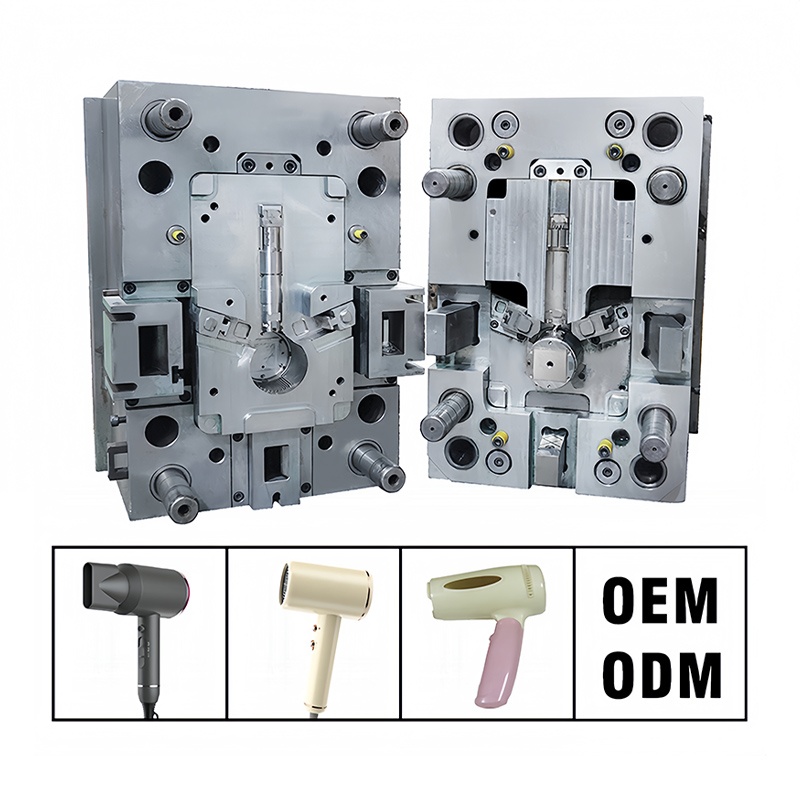
What Makes A Cleaning-Product Mold “Intelligent” In The First Place?
When I say “intelligent,” I’m not talking about adding chips or sensors to your brush handle. I’m talking about how the mold and the manufacturing plan anticipate real-world problems before they become expensive surprises. A well-executed Intelligent Cleaning Supplies Injection Mold approach tends to be “smart” in these ways:
- It reduces rework by controlling sink marks, weld lines, and cosmetic flaws on visible surfaces.
- It stabilizes assembly so snap fits, threads, and seals behave consistently across batches.
- It protects cycle time by balancing cooling and avoiding hotspots that cause warp.
- It lowers maintenance risk by selecting structures that resist wear in high-volume runs.
- It improves scalability so you can increase cavitation or capacity without redesigning everything later.
Why Do So Many Cleaning-Supplies Projects Fail After “Successful” Prototyping?
I’ve seen prototypes that look perfect and still fall apart in production. Cleaning supplies have a few traps that don’t show up until you run thousands of parts:
- Thin walls + long flow paths can lead to short shots and inconsistent textures.
- High-gloss or matte cosmetic requirements make weld lines and flow marks much more obvious.
- Ergonomic curves are warp magnets if cooling is uneven.
- Snap features can drift dimensionally, causing loose fits or cracked assemblies.
- Chemical exposure (detergents, disinfectants) can create stress-cracking risk if resin choice and gate strategy are mismatched.
This is exactly why the mold strategy matters. A thoughtful Intelligent Cleaning Supplies Injection Mold plan is less about “can we make it” and more about “can we keep making it the same way every day.”
Which Mold Decisions Have The Biggest Impact On Defects And Yield?
If you asked me where to focus first, I’d start with decisions that determine flow, cooling, and part release. Here’s a practical checklist I use when evaluating a cleaning-supplies mold concept:
- Gate location that hides marks while maintaining uniform flow to critical features
- Cooling layout designed around real heat concentrations (not “nice-looking” symmetry)
- Parting line planning to avoid flash on grip zones and sealing surfaces
- Ejection strategy that prevents whitening, drag lines, and deformation
- Surface texture and polishing plan aligned with your brand’s “hand feel” and visual style
When these fundamentals are engineered well, Intelligent Cleaning Supplies Injection Mold production becomes predictable—less firefighting, less scrap, and fewer customer complaints.
How Do You Match Materials And Mold Strategy Without Guesswork?
I don’t like choosing a resin first and “hoping the mold can handle it.” I prefer to start with use-case demands (chemical resistance, stiffness, flexibility, gloss level, recycling goals), then confirm the mold approach supports that choice. This is where an engineered Intelligent Cleaning Supplies Injection Mold workflow pays off.
| Product Requirement | Common Risk In Production | What I Look For In The Mold Plan |
|---|---|---|
| High-gloss appearance | Flow marks and weld lines show easily | Gate placement that minimizes cosmetic defects and balanced flow paths |
| Ergonomic handle with curves | Warping and twist over time | Cooling designed around thickness transitions and hotspots |
| Snap-fit assembly | Dimensional drift causes loose fit or cracking | Tight tolerance control on critical features and stable ejection |
| Chemical exposure | Stress cracking and brittleness | Resin compatibility plus flow strategy that avoids stress concentration |
| Soft-touch or textured grip | Texture inconsistency and visible defects | Consistent surface finish plan and stable process window |
What Should You Ask A Supplier Before You Approve A Mold Build?
I’ve learned that the questions you ask early will save you months later. If you’re evaluating a supplier for Intelligent Cleaning Supplies Injection Mold work, I’d use questions like these to test whether they’re thinking beyond the drawing:
- Will you recommend gate options that balance cosmetics and fill stability?
- How do you prevent warpage on curved or thin-wall parts?
- What is your plan for ejection marks on visible surfaces?
- How do you control flash around seals, threads, and parting lines?
- Can you support design optimization for cycle time without sacrificing quality?
- How do you ensure consistency across multi-cavity production?
If the supplier’s answers are vague, you’ll likely pay for it later with scrap, delays, and redesigns.
How Can Intelligent Mold Design Reduce Total Cost Even If The Mold Costs More?
This is the part procurement teams sometimes miss. A better mold can cost more upfront while saving a lot more over the product’s life. In my experience, the “real” cost drivers for cleaning supplies are usually:
- Scrap rate from warpage, sink, short shots, and cosmetic rejects
- Downtime caused by sticking parts, unstable filling, or frequent maintenance
- Assembly issues that show up as returns or rework
- Inconsistent appearance that damages brand perception on shelves
A strong Intelligent Cleaning Supplies Injection Mold solution aims to keep the process stable, reduce operator intervention, and protect your product look and feel. That’s why brands aiming for scale often upgrade the mold strategy earlier than they think they “need to.”
Which Product Types Benefit Most From A Smarter Injection Mold Approach?
Not every cleaning tool needs the same level of mold engineering, but I see especially strong ROI when the product includes:
- Complex geometry or multi-part assemblies
- High cosmetic requirements for consumer retail
- Thin-wall structures to reduce weight or material cost
- Integrated features like clips, hinges, or locking tabs
- Parts that must feel “premium” in-hand
For these categories, investing in Intelligent Cleaning Supplies Injection Mold planning usually reduces time-to-market surprises and supports stable mass production.
How Do You Keep Quality Consistent When You Scale From Pilot To Mass Production?
I don’t trust “it looked fine in the pilot” as proof of scalability. When you ramp up, small issues become daily losses. A practical scaling mindset includes:
- Process window definition so your parameters have safe ranges, not one fragile “sweet spot”
- Clear critical-to-quality dimensions and measurement routines
- Cooling and fill validation to avoid batch-to-batch drift
- Maintenance planning that prevents performance drop-offs in long runs
- Future capacity planning so multi-cavity or higher-output options stay open
If your supplier treats these as standard practice, you’re much more likely to get repeatable output from your Intelligent Cleaning Supplies Injection Mold program.
Ready To Make Your Next Mold Program More Predictable?
If you’re planning a new cleaning product or struggling with defects, cycle time, or inconsistent assembly, I’d treat Intelligent Cleaning Supplies Injection Mold planning as an investment in stability. If you want to discuss your part design, expected volumes, cosmetic requirements, or material goals, contact us and share your project details—my advice is simple: the sooner you validate the mold strategy, the fewer surprises you’ll pay for later.