

Why do I trust Ductile Iron Pipe for tough, long-life water networks?
2025-12-12
I build and maintain pipelines in places where repairs are expensive and downtime is unforgiving, so I look for materials that behave predictably when the ground shifts, traffic loads spike, or water quality changes. That is why I keep returning to Epoch solutions and—more importantly—to Ductile Iron Pipe. Over years of projects, I’ve learned that when design, coatings, and installation are handled with discipline, Ductile Iron Pipe delivers a blend of strength, flexibility, and lifecycle value that is hard to beat. Below is how I evaluate it in the field and why it keeps earning its place in my specs.
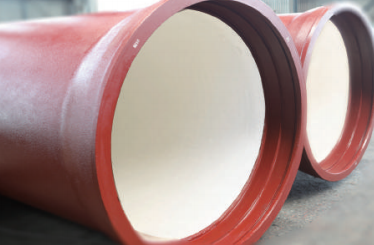
What makes the material structure resist cracks and keep working?
The first thing I look at is how Ductile Iron Pipe behaves under real soil movement. Its graphite nodules and ferritic-pearlitic matrix give it the ductility to flex rather than snap, so minor settlement or vibration doesn’t turn into a leak. I’ve seen it tolerate deflection where rigid materials would craze. Add restrained joints where thrust is expected, and the system stays tight through pressure transients and seasonal cycles.
- High hoop strength supports higher pressure ratings without oversizing.
- Elastic stretch allows joint deflection around curves and obstacles.
- Impact tolerance reduces handling damage during fast-track installs.
How do I choose class, diameter, and lining without overpaying?
With Ductile Iron Pipe, I start from hydraulic needs, then check surge margins and applicable pressure class. For potable mains, standard cement mortar lining handles most chemistries; for aggressive water or wastewater, I move to epoxy or ceramic-enhanced linings. Outside, zinc-rich or zinc-aluminum coatings plus finishing layers match typical soil corrosivity; for hotspots, I add polyethylene encasement.
- Size for velocity and headloss targets, not habit—right-size reduces pumps and energy.
- Select pressure class from working + surge, then verify joint rating consistency.
- Match lining to water chemistry; avoid “maximum everything” that burns cash.
Where do corrosion risks really come from and how do I mitigate them?
Most failures I’ve investigated did not come from the base metal of Ductile Iron Pipe but from overlooked local conditions—stray current near transit, dissimilar-metal contacts, or pockets of high chlorides. I treat soil data as design input, not paperwork: resistivity, moisture, and redox drive the protection plan.
- Use zinc-based external coatings as the default barrier; upgrade where soils demand.
- Isolate flanges and appurtenances to control galvanic couples.
- Apply polyethylene encasement in targeted segments; consider test stations for monitoring.
- For high-risk corridors, evaluate sacrificial anodes or impressed current systems.
What installation mistakes ruin performance and how do I avoid them?
My crews follow a short, non-negotiable checklist whenever we set Ductile Iron Pipe in the trench.
- Bed and haunch with well-graded material; avoid point loads from rocks.
- Clean and lubricate gaskets, align carefully, and mark insertion lines to confirm seating.
- Respect allowable joint deflection; don’t force curvature beyond design.
- Backfill in lifts and compact evenly to keep the pipe supported all around.
- Hydrostatically test with calibrated gauges and record pressure/hold times.
How does it stack up against alternatives in lifecycle cost?
I try to compare total cost, not just bid day numbers. The table below is how I summarize what owners care about when weighing Ductile Iron Pipe against common options.
| Criterion | Ductile Iron Pipe | PVC Pressure Pipe | Carbon Steel Pipe |
|---|---|---|---|
| Structural strength under cover and traffic | High; carries load with safety margin | Moderate; relies heavily on soil embedment | High; but requires strict corrosion control |
| Tolerance to impact and handling | Excellent; low breakage rates | Fair; brittle in cold or mishandled | Good; denting possible |
| Typical trench width and bedding sensitivity | Moderate; forgiving to bedding variability | Higher sensitivity; needs uniform support | Moderate; welding adds complexity |
| Corrosion strategy | Coatings + encasement; targeted cathodic protection | Minimal for soil, depends on water chemistry | Coatings + rigorous cathodic protection |
| Leak risk at joints over time | Low with restrained or push-on gaskets | Low to moderate; thermal movement matters | Low with welded joints; higher inspection cost |
| Lifecycle cost on 50-year horizon | Often lowest when failures are costly | Low initially; variable long-term | High; protection and inspection add up |
Which standards and tests should I insist on before acceptance?
For Ductile Iron Pipe, I verify compliance with the relevant dimensional, material, and coating standards, then witness or review hydrostatic and coating tests. I prefer mill traceability that ties each length to its heat and test record.
- Confirm dimensional tolerances and pressure classes per the governing standard in your region.
- Check lining/coating type, thickness, and cure data.
- Review hydrostatic test certificates; validate random lengths on site.
- Document gasket and joint compatibility across fittings and valves.
When do I bring experts in for a quick design review?
When the corridor mixes utilities, rail, or stray current sources—or when soils vary sharply—I ask for a rapid review. That collaboration has saved me far more than it ever costs, especially on big diameters of Ductile Iron Pipe where a single mistake is expensive to undo. A short conversation can right-size coatings, confirm restraint lengths, and tidy up details like thrust block geometry.
What practical takeaways help me deliver a quieter, lower-leak network?
My rule is simple: design honestly, install carefully, and document everything. Do those three, and Ductile Iron Pipe rewards you with tight joints, stable pressures, and fewer callouts. It is not about brand slogans; it’s about predictable results across seasons and operators.
- Right-size classes and joints to pressure and surge, not habit.
- Use coatings and encasement where soil data says so, not everywhere.
- Train crews on gasket care and deflection limits; verify with marks.
- Test methodically and record; leaks get fixed before backfill.
If you’re planning a new main, a rehab, or a high-consequence crossing and want a second set of eyes, I’m happy to help you tune the specification and installation plan around Ductile Iron Pipe. For pricing, design checks, or a quick bill of materials from Epoch, contact us today and tell me about your flow rates, corridor constraints, and soil conditions—I’ll respond with a tailored path forward that makes your network easier to own.