

Why Do Silicon Carbide Cantilever Paddles Offer Better Thermal Stability Than Metal or Silicon Alternatives
2026-06-16
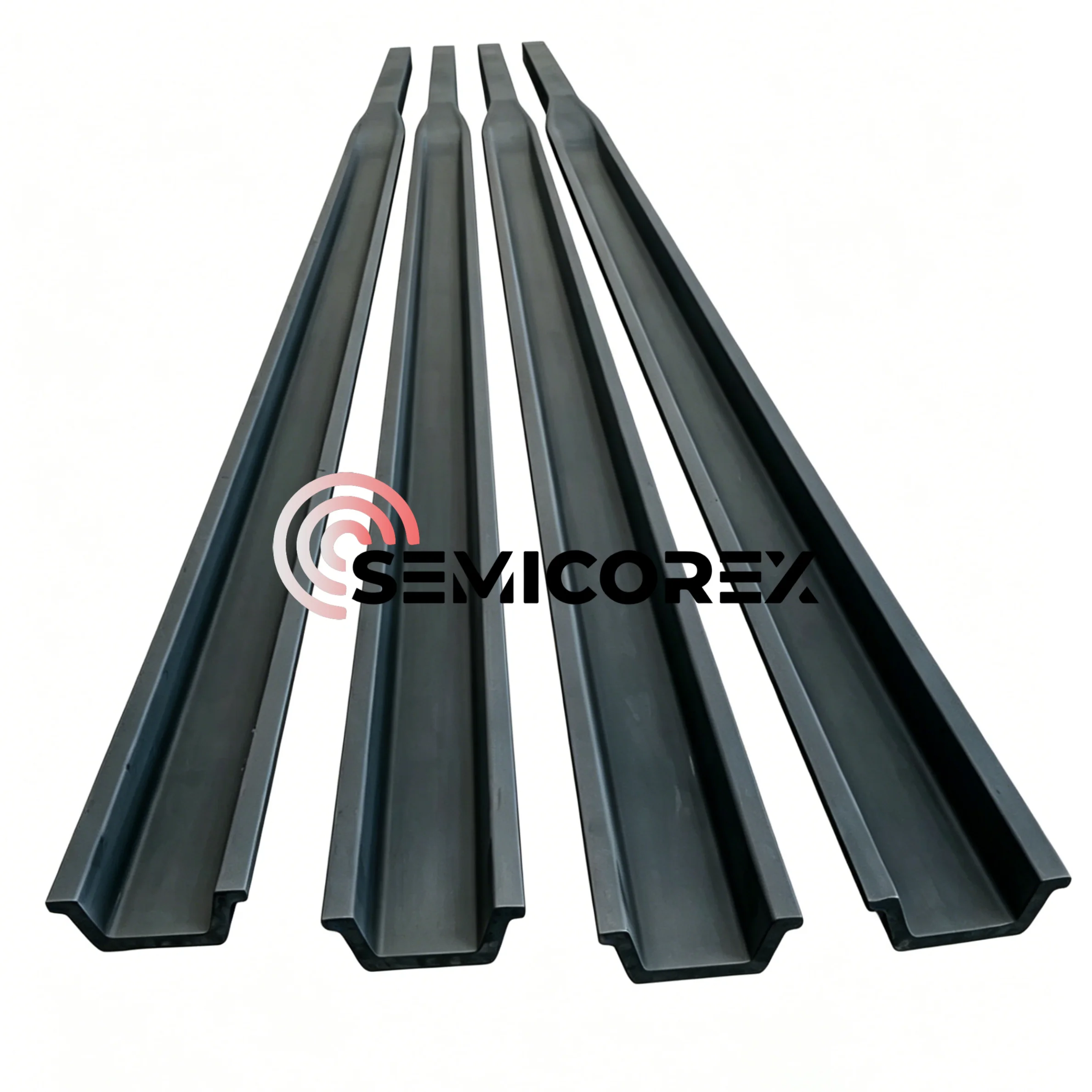
In the demanding world of semiconductor manufacturing, high-temperature processing, and advanced MEMS fabrication, component failure due to thermal degradation remains a persistent challenge. Silicon Carbide Cantilever Paddles have emerged as the superior solution, primarily because their unique material properties enable exceptional thermal stability where traditional metal and silicon alternatives consistently fall short. At Semicorex, we have engineered our Silicon Carbide Cantilever Paddles to withstand extreme thermal cycles while maintaining structural integrity, dimensional precision, and mechanical performance—factors that directly impact yield, uptime, and overall equipment effectiveness in critical production environments.
The Thermal Stability Challenge in High-Temperature Processing
To understand why Silicon Carbide Cantilever Paddles outperform metals and silicon, we must first examine the thermal failure mechanisms affecting conventional materials. Metals such as stainless steel, aluminum, and molybdenum exhibit significant thermal expansion mismatches, creep at elevated temperatures, and oxidation susceptibility. Silicon, despite its widespread use in microfabrication, suffers from brittle fracture, rapid strength degradation above 400°C, and plastic deformation under sustained thermal loads.
| Material | Max Service Temp (°C) | Thermal Conductivity (W/m·K) | CTE (ppm/°C) | Oxidation Resistance | Creep Resistance |
|---|---|---|---|---|---|
| Stainless Steel | ~650 | ~16 | ~17 | Moderate | Poor above 600°C |
| Aluminum Alloy | ~350 | ~200 | ~23 | Poor | Very Poor |
| Molybdenum | ~1,100 | ~138 | ~5.1 | Poor (forms volatile oxides) | Moderate |
| Single-Crystal Silicon | ~450 | ~148 | ~2.6 | Good (SiO₂ layer) | Poor above 500°C |
| SiC (Semicorex grade) | ~1,650 | ~120 | ~4.0 | Excellent (protective SiO₂) | Excellent up to 1,400°C |
The table above clearly demonstrates that Silicon Carbide Cantilever Paddles offer the broadest operating temperature window, combined with a coefficient of thermal expansion (CTE) closely matched to common ceramic susceptors and process chambers—minimizing thermally induced stress and warpage during rapid thermal annealing (RTA) or chemical vapor deposition (CVD) cycles.
Key Mechanisms Behind Superior Thermal Stability
1. Covalent Bonding and High Debye Temperature
Silicon carbide’s strong tetrahedral covalent bonds (Si–C) result in an exceptionally high Debye temperature (~1,200 K), meaning atomic vibrations remain constrained even at extreme temperatures. This directly translates to minimal creep, reduced dislocation mobility, and stable elastic modulus up to 1,200°C. In contrast, metallic bonds weaken progressively with temperature, leading to grain boundary sliding and accelerated creep.
2. Passive Oxidation and Self-Protection
When exposed to oxygen at high temperatures, Silicon Carbide Cantilever Paddles form a thin, dense, and adherent layer of silicon dioxide (SiO₂) that passivates the surface and inhibits further oxidation. This self-limiting oxidation behavior is fundamentally different from molybdenum, which forms volatile MoO₃ that sublimes, causing mass loss and contamination, or aluminum, which melts and oxidizes catastrophically above 660°C.
3. Thermal Shock Resistance
The combination of moderate thermal conductivity (~120 W/m·K) and low CTE (~4.0 ppm/°C) gives Silicon Carbide Cantilever Paddles an excellent thermal shock figure of merit. Semicorex paddles can withstand rapid temperature changes of >500°C/min without fracture—a critical requirement for load-lock transfer arms and rapid thermal processing (RTP) systems where metal paddles would warp and silicon paddles would shatter.
Practical Performance Comparison in Real-World Scenarios
| Parameter | Metal Paddles | Silicon Paddles | Semicorex SiC Paddles |
|---|---|---|---|
| Warpage after 1,000 cycles (25–1,000°C) | >200 μm | >150 μm (crack-prone) | <20 μm |
| Particle generation (per 1,000 transfers) | High (oxide spallation) | Moderate (edge chipping) | Low (chemically inert) |
| Lifetime in CVD reactor (hours) | <500 | <300 | >3,000 |
| Contamination risk (Fe, Ni, Cu, Na) | High | Low (but brittle) | Ultra-low (high-purity SiC) |
| Maintenance frequency | Weekly | Bi-weekly | Quarterly |
This quantitative data reinforces why leading fabs are transitioning to Silicon Carbide Cantilever Paddles for critical processes such as epitaxial growth, SiC power device fabrication, and high-temperature dielectric deposition.
Frequently Asked Questions About Silicon Carbide Cantilever Paddles
Q1: At what exact temperature do Silicon Carbide Cantilever Paddles begin to degrade, and how does that compare to silicon paddles?
A1: High-purity Silicon Carbide Cantilever Paddles from Semicorex maintain >95% of their room-temperature flexural strength up to 1,400°C in inert or vacuum environments, with minor strength reduction beginning around 1,500°C due to sublimation. In oxidizing atmospheres, the protective SiO₂ layer remains stable up to 1,650°C. In direct contrast, single-crystal silicon paddles experience significant strength loss starting at 450°C due to dislocation glide, and by 600°C, they exhibit permanent plastic deformation under typical cantilever loading (e.g., 50–200g wafer mass). For applications above 500°C, silicon paddles are essentially unsuitable, whereas SiC paddles provide a safety margin of nearly 1,000°C.
Q2: How do Silicon Carbide Cantilever Paddles handle repeated rapid heating and cooling cycles without warping?
A2: Warpage resistance in Silicon Carbide Cantilever Paddles stems from three synergistic factors. First, the CTE of SiC (~4.0 ppm/°C) closely matches that of common susceptor materials like graphite-coated SiC (~4.5 ppm/°C) and AlN (~4.3 ppm/°C), minimizing differential thermal expansion at contact points. Second, Semicorex manufactures paddles with a graded density and optimized grain structure that reduces internal thermal gradients. Third, the high thermal diffusivity (~0.8 cm²/s) allows rapid heat equalization, preventing the development of steep temperature gradients that cause bending moments. In accelerated lifetime tests, Semicorex paddles survive >5,000 thermal cycles (25°C ↔ 1,000°C, ramp rate 50°C/s) with less than 20 μm permanent deflection, whereas stainless steel paddles show >200 μm warpage after just 200 identical cycles.
Q3: Are Silicon Carbide Cantilever Paddles cost-effective compared to metal alternatives when factoring in total cost of ownership?
A3: While the initial purchase price of Silicon Carbide Cantilever Paddles is higher than that of stainless steel or aluminum paddles—typically 3–5× more—the total cost of ownership (TCO) analysis strongly favors SiC. Key TCO components include: (a) Extended lifetime: Semicorex SiC paddles last 6–10× longer in high-temperature CVD processes, reducing replacement frequency and spare-part inventory. (b) Reduced downtime: Fewer unscheduled maintenance events improve tool availability by an estimated 8–12% annually. (c) Lower defect rates: Minimal particle shedding and zero metallic contamination increase device yield by 2–5% in power device and RF MEMS production. (d) Process stability: Consistent paddle geometry eliminates recalibration drift, saving engineering hours. Over a 5-year horizon, Semicorex customers report a 40–60% reduction in per-wafer handling cost, making SiC paddles the economically rational choice for high-volume manufacturing.
Conclusion: Thermal Stability as a Competitive Advantage
The evidence is unequivocal—Silicon Carbide Cantilever Paddles deliver unmatched thermal stability through intrinsic material advantages: covalent bond strength, passive oxidation protection, matched CTE, and exceptional thermal shock resistance. Metals suffer creep, oxidation, and warpage; silicon suffers brittleness and strength collapse; only SiC provides the robust, repeatable, and reliable performance that advanced semiconductor production demands.
Semicorex specializes in precision-engineered Silicon Carbide Cantilever Paddles tailored to your specific process conditions—whether RTP, epitaxy, LPCVD, PECVD, or high-temperature etching. Our paddles are available in customizable lengths, thicknesses, surface finishes, and edge geometries to fit all major tool platforms.
Ready to upgrade your thermal management strategy? Contact Semicorex today for a comprehensive thermal performance analysis and a customized paddle solution that reduces downtime, boosts yield, and extends process capability beyond 1,400°C. Our engineering team provides rapid prototyping, FEA-based stress simulation, and on-site installation support.