

Why Does Advertising Acrylic Win Real-World Campaigns?
2025-12-11
I work in environments where deadlines are tight, lighting is unforgiving, and foot traffic has no patience. In that pressure cooker, I keep reaching for KINGSIGN solutions built around Advertising Acrylic. The material’s clarity, polish, and predictable fabrication let me turn concepts into durable displays. Instead of echoing a product brochure, I’ll break down how I evaluate, cut, bend, and scale Advertising Acrylic for storefronts, pop-ups, and trade events—so you can copy the parts that fit your own rollouts.
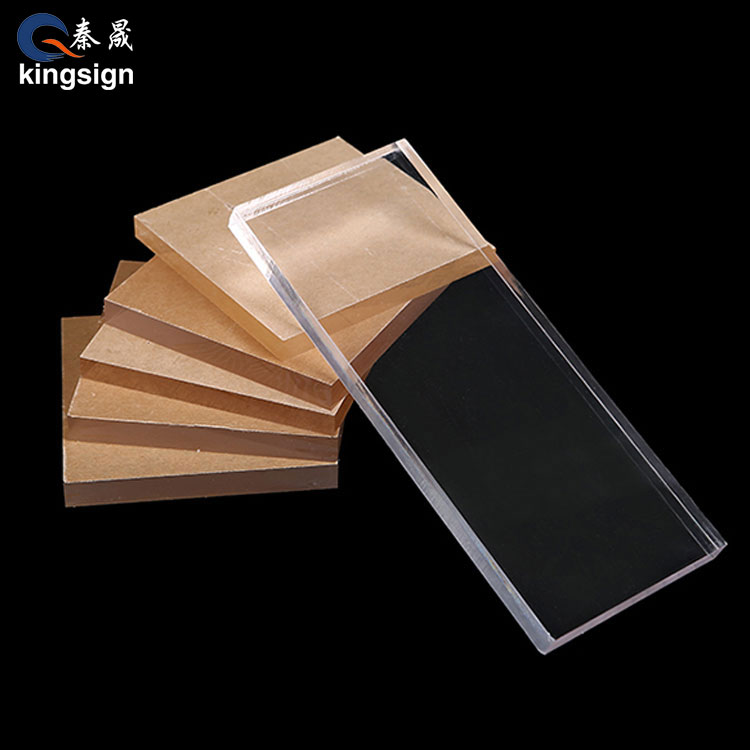
What Visual Gains Do I Actually See With Advertising Acrylic?
- Edge brilliance that reads like glass but weighs less, which helps me install larger panels safely.
- High light transmission for backlit graphics, making colors punch without oversaturating prints.
- Scratch-resistant options that keep surfaces clean under retail lighting and camera phones.
- Consistency from sheet to sheet, so a national rollout looks uniform in every store window.
When I design for window-front storytelling, Advertising Acrylic gives me the contrast and depth that PVC or cardboard can’t match, especially under LED rails and edge-lit frames.
How Do I Pick the Right Sheet For Indoors Versus Outdoors?
- Location and exposure — If panels face direct sun, I spec UV-stabilized Advertising Acrylic to slow yellowing and preserve brand colors.
- Impact risk — In high-touch zones, I step up thickness or add hard-coat to strike a balance between clarity and durability.
- Lighting plan — For lightboxes, I choose diffusion grades to avoid hotspots; for edge-lighting, I prefer high-clarity sheets.
- Compliance — Malls and airports often dictate fire and smoke performance; I confirm ratings before procurement.
Which Fabrication Methods Keep Edges Flawless Without Blowing the Timeline?
- Laser cutting for crisp contours and polished edges that need minimal post-work.
- CNC routing for thicker gauges or when I need tight tolerances on fixtures.
- Line bending to create clean folds for brochure holders and stair-step risers.
- Solvent or UV bonding for invisible seams on cases, podiums, and risers.
I prototype small, dial feeds and temps, then lock a production recipe so hundreds of identical parts land on schedule—all while keeping the signature clarity of Advertising Acrylic.
What Pitfalls Do Teams Overlook And How Do I Avoid Them?
- Glare — I add anti-glare films or matte prints where light is harsh.
- Cleaning damage — I specify acrylic-safe cleaners and train staff to avoid ammonia-based sprays.
- Thermal movement — I leave expansion gaps in frames so panels don’t bow or craze.
- Shipping scuffs — I keep protective film on through install and pack panels upright with corner guards.
Most failures aren’t the material; they’re handling. A simple care sheet taped to the crate has saved more Advertising Acrylic panels than any miracle coating.
Can Eco-Minded Campaigns Use Acrylic Without Greenwashing?
I plan sustainability by design. I standardize panel sizes for reuse across campaigns, collect offcuts for secondary fixtures, and consolidate freight to cut emissions. When specs allow, I evaluate recyclable grades of Advertising Acrylic and design hardware for disassembly so components can be recovered instead of tossed.
Where Do Specs Actually Matter When Budgets Are Real?
| Use Case | Suggested Thickness | Finish | Notes |
| Window posters, edge-lit frames | 2–3 mm | Clear, high-transmission | Maximize brightness; add UV stabilization if sun-facing |
| Retail risers, product pedestals | 5–8 mm | Gloss or hard-coat | Prioritize scratch resistance and load-bearing |
| Lightbox diffusers | 3–5 mm | Opal / diffusion grade | Eliminate hotspots; pair with LED spacing plan |
| Outdoor signs, standoffs | 5–10 mm | UV-stabilized clear | Account for thermal expansion and wind load |
How Do I Measure ROI Without Guesswork?
- Uptime — I track how long displays stay “photo-ready” before refresh is needed.
- Install speed — Pre-finished edges on Advertising Acrylic cut field time and labor cost.
- Reusability — Panels sized for future campaigns reduce total cost of ownership.
- Sales lift — I correlate periods of elevated footfall and conversions with new visual treatments.
What Pre-Order Checklist Keeps Projects On Rails?
- Confirm environment: indoor or outdoor, sun exposure, temperature swings.
- Lock thickness, finish, and protective film requirements.
- Approve fabrication tests: laser vs. CNC, bend radii, bonding method.
- Validate mounting: standoffs, frames, adhesives, and expansion gaps.
- Plan logistics: packaging, labeling, and site install sequence.
With this checklist, my Advertising Acrylic orders arrive ready to install, and store teams spend time merchandising—not troubleshooting.
Why Do I Keep Choosing KINGSIGN For Complex Rollouts?
Consistency is the short answer. Material that behaves the same at prototype, pilot, and nationwide scale saves me revisions and reprints. When a flagship window requires pristine clarity, I lean on partners who understand the stakes. That reliability is why I specify solutions built around Advertising Acrylic again and again—and why KINGSIGN sits on my shortlist for fast, predictable execution.
What Should You Do If You’re Scoping A New Campaign Right Now?
If you’re mapping lightboxes, risers, or window features and want that clean glass-like look without the headaches, build your spec on Advertising Acrylic. Share sizes, photos of the site lighting, and any compliance notes. I’m happy to review drawings and suggest a stack that fits your timeline and budget. Ready to move from mood board to install plan? Contact us today and let’s align on the right Advertising Acrylic grade, thickness, and finish for your launch.