

Why Is Asphalt Waterproofing Equipment Essential for Modern Construction?
2026-09-29
A waterproofing contractor wins a contract for 30,000 square meters of roof membrane. The project schedule gives 8 weeks for material supply and installation. The contractor orders membrane from a third-party supplier. Two weeks before the deadline, the supplier informs the contractor that the delivery will be delayed by 10 days because of a raw material shortage. The contractor faces penalties for late completion. This scenario is repeated across the construction industry every year. The root cause is not the supplier's incompetence. It is the contractor's dependence on an external supply chain that they cannot control. An Asphalt Waterproofing Membrane Equipment line gives the contractor direct control over production volume, quality, and delivery. This guide explains why that control is essential for modern construction projects.
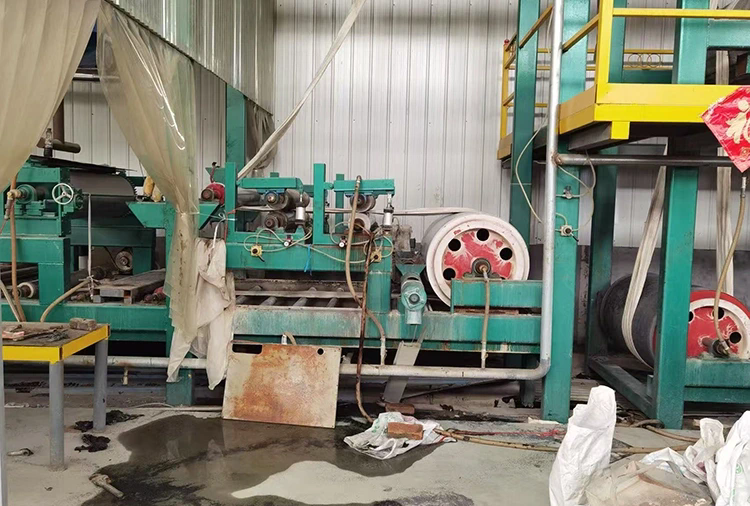
1. What Is the Cost Difference Between In-House Production and Outsourcing?
The cost of a waterproofing membrane has three components: raw material, processing, and supplier margin. When a contractor buys from a third-party supplier, they pay for all three. When they produce in-house using an Asphalt Waterproofing Membrane Equipment line, they pay only for raw material and processing. The supplier margin is eliminated. For a typical SBS-modified bitumen membrane, the supplier margin is 15 to 25 percent of the selling price. For a project that requires 200,000 square meters of membrane, this margin can be $200,000 to $400,000. The table below shows the cost comparison for a medium-sized production line.
| Cost component | Outsourced membrane | In-house production |
| Raw material (bitumen, SBS, filler) | Included in selling price | $2.80 per m² |
| Processing (labor, energy, depreciation) | Included in selling price | $0.90 per m² |
| Supplier margin | $1.20 per m² | $0 |
| Total cost per m² | $4.90 per m² | $3.70 per m² |
| Cost saving for 200,000 m² | N/A | $240,000 |
In our factory, we have calculated the return on investment for contractors who install an Asphalt Waterproofing Membrane Equipment line. For a line with a capacity of 10 million square meters per year, the investment is recovered in 18 to 24 months through the cost saving alone. Shouguang Haiming Machinery Co., Ltd. manufactures these lines in a range of capacities and provides a full ROI analysis for each customer.
2. How Does In-House Production Improve Quality Control?
Quality control is the second driver. A waterproofing membrane must meet specific standards for thickness, tensile strength, elongation, and heat resistance. When the membrane is produced in-house, the contractor can test each batch before it is installed. If a batch does not meet the specification, it can be adjusted or rejected before it reaches the roof. When the membrane is purchased from a supplier, the contractor must rely on the supplier's quality control and the certificate of analysis. If a problem is discovered after installation, the cost of removal and replacement is far higher than the cost of the membrane itself. The table below shows the quality parameters that can be controlled in-house.
| Quality parameter | Typical specification | In-house testing frequency |
| Thickness | 3.0 mm ± 0.2 mm | Every 500 m² |
| Tensile strength (longitudinal) | ≥ 800 N/50 mm | Every batch |
| Elongation at break | ≥ 40% | Every batch |
| Heat resistance | ≥ 105°C for 2 hours | Weekly |
| Low temperature flexibility | -25°C, no cracking | Weekly |
| Water impermeability | 0.3 MPa, 30 minutes | Every batch |
Shouguang Haiming Machinery Co., Ltd. equips every Asphalt Waterproofing Membrane Equipment line with a laboratory testing station. The station includes a thickness gauge, a tensile tester, and a heat resistance oven. We also provide training for the contractor's quality control team. This allows the contractor to verify that every roll of membrane meets the project specification before it is installed.
3. How Does Production Capacity Match Project Schedules?
Project schedules in construction are tight. A delay in material supply can cascade into delays in other trades. When the contractor controls the production line, they can schedule production to match the installation sequence. If the installation is delayed by rain, the production can be paused. If the installation is accelerated, the production can be increased by adding shifts. The table below shows the production capacity of our standard lines and the corresponding project completion time.
| Line capacity | Membrane width | Production speed | Time for 200,000 m² |
| 5 million m²/year | 1,000 mm | 10 m/min | 40 days (single shift) |
| 10 million m²/year | 1,000 mm | 20 m/min | 20 days (single shift) |
| 15 million m²/year | 1,200 mm | 25 m/min | 14 days (single shift) |
| 20 million m²/year | 1,200 mm | 30 m/min | 10 days (single shift) |
The production speed can be increased by adding a second or third shift. For a 10 million m²/year line, a double shift reduces the time for 200,000 m² to 10 days. This flexibility allows the contractor to respond to changes in the project schedule without relying on the supplier. In our factory, we have seen contractors use this flexibility to win projects that required fast-track delivery.
4. What Are the Common Quality Problems in Outsourced Membrane?
Outsourced membrane can have quality problems that are not visible until installation or after the project is complete. The most common problems are thickness variation, poor adhesion between the bitumen and the reinforcement, and inconsistent SBS content. Thickness variation causes weak spots that can fail under hydrostatic pressure. Poor adhesion causes delamination, which allows water to migrate between the layers. Inconsistent SBS content affects the low-temperature flexibility and the aging resistance. The table below shows the typical failure rates for outsourced membrane in different project types.
| Project type | Failure rate (outsourced) | Failure rate (in-house) | Primary failure cause |
| Roof waterproofing | 5 – 8% | 1 – 2% | Thickness variation |
| Basement waterproofing | 8 – 12% | 2 – 3% | Delamination |
| Tunnel waterproofing | 10 – 15% | 2 – 4% | Poor low-temperature flexibility |
| Bridge deck waterproofing | 6 – 10% | 1 – 3% | Inconsistent SBS content |
Field experience: In our factory, we have visited projects where outsourced membrane failed within 12 months of installation. The failure was traced to a batch of membrane that had a thickness of 2.4 mm instead of the specified 3.0 mm. The supplier had reduced the thickness to save cost. The contractor had not measured the thickness on site. This type of failure is preventable when the contractor controls the production line.
Frequently Asked Questions About Asphalt Waterproofing Membrane Equipment
Summary for Waterproofing Contractors
An Asphalt Waterproofing Membrane Equipment line is essential for modern construction because it gives the contractor control over cost, quality, and delivery. The cost saving is 20 to 25 percent compared to outsourced membrane. The quality control allows the contractor to test every batch before installation. The production flexibility allows the contractor to match the project schedule. For contractors who want to grow their business and reduce their dependence on external suppliers, the investment in an in-house production line is a strategic decision. Shouguang Haiming Machinery Co., Ltd. has been manufacturing these lines for over 15 years and supplies to contractors worldwide.
Shouguang Haiming Machinery Co., Ltd. manufactures Asphalt Waterproofing Membrane Equipment lines in capacities from 5 to 20 million square meters per year. We provide full installation, commissioning, and training services.