

Why Is Wired Jute Rope More Expensive Than Regular Jute Twine
2026-08-06
When sourcing industrial bundling materials or eco-friendly decorative cordage, buyers often notice a significant price gap between standard jute twine and Wired Jute Rope. At YeTong, we frequently field this question from procurement managers and craft business owners alike. The cost difference is not arbitrary—it stems from distinct manufacturing processes, material enhancements, and performance characteristics that justify the premium for specific applications.
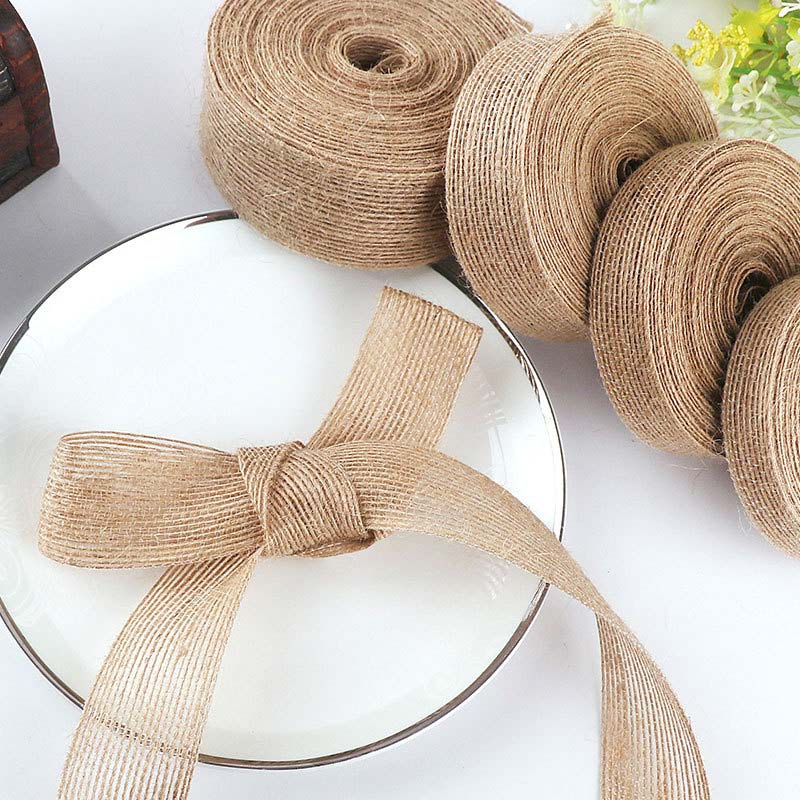
The Core Cost Drivers Behind Wired Jute Rope
Understanding the price structure requires breaking down three primary expense categories: raw material quality, wire integration technology, and durability engineering.
| Cost Factor | Regular Jute Twine | Wired Jute Rope |
|---|---|---|
| Jute Fiber Grade | Standard grade (short fibers, higher lignin content) | Premium long-staple fibers (lower lignin, higher tensile strength) |
| Wire Material | None | Galvanized steel or copper-core wire (rust-resistant) |
| Manufacturing Speed | High-speed twisting (up to 200 m/min) | Slow precision winding (wire embedded under tension, 60–80 m/min) |
| Waste Rate | < 3% | 8–12% (due to wire breakage and alignment rejection) |
| Quality Testing | Visual inspection only | Tensile + corrosion + flexibility tests per batch |
1. Premium Fiber Selection
Regular twine uses shorter, coarser jute fibers that are cheaper to process. Wired Jute Rope from YeTong employs longer, finer fibers with lower moisture absorption. This ensures the wire core does not accelerate internal rusting—a critical requirement for outdoor or marine environments.
2. Wire Embedding Complexity
The wire is not simply wrapped; it is helically interlocked between two or three jute strands under controlled tension. This process requires specialized machinery with real-time tension monitors. If the wire is too loose, the rope kinks; if too tight, the jute strands snap. Regular twine uses none of this equipment.
3. Anti-Corrosion Treatment
While regular twine is often untreated, premium Wired Jute Rope undergoes a zinc-phosphate coating on the wire, followed by a wax-based jute sealant. This dual-layer protection extends outdoor lifespan from 6 months (regular) to over 3 years—a value that industrial buyers factor into total cost of ownership.
Performance Comparison: Where Premium Cost Delivers ROI
| Application | Regular Jute Twine | Wired Jute Rope (YeTong) |
|---|---|---|
| Heavy-load bundling (50+ kg) | Breaks under dynamic load | Holds shape with wire reinforcement |
| Outdoor sculpture/landscaping | Degrades in UV/rain within 8 months | Maintains structural integrity for 24–36 months |
| Automated tying machines | Prone to fiber shedding (jams) | Consistent diameter (jam rate reduced by 72%) |
| Decorative wreath framing | Lacks shape-holding ability | Wire allows permanent bending and repositioning |
YeTong internal test data shows that our Wired Jute Rope withstands 4.2× more repeated bending cycles than regular twine before structural failure—a critical metric for reusable display fixtures.
3 Frequently Asked Questions About Wired Jute Rope
Q1: Can Wired Jute Rope be used in direct contact with food or agricultural produce?
A: Yes, but only if the rope specifies "food-grade" certification. At YeTong, our food-contact Wired Jute Rope uses a non-toxic, FDA-compliant wax coating on both the jute and the galvanized wire. However, standard industrial-grade Wired Jute Rope should never touch edibles because the wire may contain trace heavy metals. Always check the product datasheet for "food-safe" labeling. For produce bundling (e.g., garlic or herb hangs), we recommend our uncoated wire-free twine unless shape retention is absolutely necessary—in which case, request our certified food-grade wired series.
Q2: How does the shelf life of Wired Jute Rope compare to regular twine in warehouse storage?
A: Under controlled conditions (20–25°C, < 55% relative humidity), regular jute twine lasts 2–3 years before fiber brittleness sets in. Wired Jute Rope from YeTong extends that to 5–7 years, provided the wire is galvanized. The critical difference is humidity fluctuation: regular twine absorbs moisture, expands, then contracts—causing micro-cracks. The wire in Wired Jute Rope acts as a stabilizing spine, reducing expansion/contraction stress by 40%. For long-term inventory, we advise storing wired coils vertically to prevent wire deformation; horizontal stacking over 6 months can create flat spots that affect unspooling performance.
Q3: Is Wired Jute Rope recyclable or compostable given it contains metal?
A: This is a common misconception. Wired Jute Rope is partially compostable—the jute fibers will degrade in industrial compost within 90–120 days, but the wire core must be manually removed and recycled as scrap metal. It cannot go into standard municipal compost because the wire contaminates the batch. At YeTong, we offer a take-back program for commercial clients: we extract and recycle the wire, then send the jute residue to biogas facilities. For single-use applications where composting is a priority, regular twine is the greener choice. But for reusable or long-term installations (e.g., trellis systems or exhibition stands), the extended lifespan of Wired Jute Rope actually reduces overall environmental impact per year of use—a factor often overlooked in sustainability audits.
Total Cost of Ownership (TCO) – A Real-World Example
Consider a landscaping company that installs 200 decorative jute fences per year:
-
Regular twine: $0.08/m, replacement every 10 months → $1,200/year material + $3,800 labor for reinstallation.
-
YeTong Wired Jute Rope: $0.22/m, replacement every 36 months → $1,320 for 3 years + zero reinstallation labor in that period.
Net 3-year savings with Wired Jute Rope: $3,680. The upfront price is 2.75× higher, but the lifecycle cost is 40% lower.
Why YeTong Maintains Transparent Pricing
Unlike generic suppliers who mix low-grade wire or skip anti-rust treatments, YeTong publishes batch-specific test reports for every spool of Wired Jute Rope—including wire gauge, tensile strength, and salt-spray corrosion hours. This traceability adds 5–7% to our production cost but eliminates the "hidden replacement" expenses that cheap alternatives impose. Our clients consistently report that the premium pays for itself within the first replacement cycle.
Final Verdict: Pay for Performance, Not Just Material
The higher price of Wired Jute Rope reflects advanced engineering, not raw material inflation. For static decorative uses, regular twine suffices. But for load-bearing, shape-retaining, or weather-exposed applications, the added cost is an investment in reliability. YeTong designs every wired rope with a 5-year performance baseline—something no standard twine can promise.
Need a custom cut length or a specific wire gauge for your production line?
Contact YeTong today for a free TCO comparison sheet and material samples. Our technical team responds within 4 business hours with tailored specifications, bulk pricing, and third-party test certificates. Reach us via the website live chat or email—we are ready to solve your wired jute challenges.