

Will The Right Brick Machine Pallet Actually Lower My Cost Per Block?
2025-12-10
I run a concrete products yard, and hard lessons taught me that daily output lives or dies with the pallet under every mold. When I started re-evaluating options, I kept meeting suppliers who serve bigger integrated lines such as QGM. That pushed me to rethink what I really expect from a Brick Machine Pallet and how a smarter choice can unlock cleaner demolding, less breakage, and steadier cycles without overhauling the whole press.
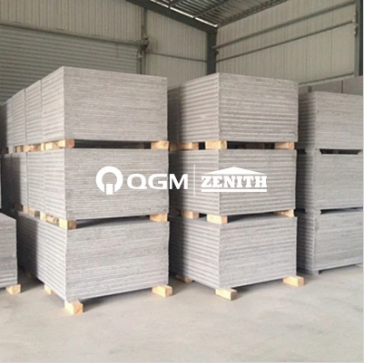
What problems do most yards face with pallets?
A Brick Machine Pallet that behaves perfectly on Monday can warp, swell, or chip by Friday if the material and thickness are mismatched to vibration energy, moisture, or curing habits. Here is the short list I keep taped to the control panel:
- Warping that lifts corners and ruins height tolerance on outer bricks
- Water uptake that swells edges and sticks to the mold liner
- Surface dents that print into faces and drive reject rates
- Excess weight that slows handling and wears conveyors and bearings
- Thermal creep that shows up as mid-summer bowing or winter brittleness
How do material choices change performance on the line?
Not all pallets react the same to vibration, demolding force, and steam curing. I keep a simple comparison for my operators to understand why we stock more than one style when we run mixed SKUs.
| Material | Core strengths | Typical thickness | Notes for operators |
|---|---|---|---|
| PVC or WPC composite | Stable in moisture, good impact, consistent flatness | 18–25 mm | Best all-rounder for high vibration lines and frequent wash-downs |
| Bamboo or engineered wood | Cost-effective, gentle on mold liners | 20–30 mm | Seal edges; watch humidity swings and storage practices |
| GFRP composite | High stiffness-to-weight, low creep | 16–22 mm | Great for tight height tolerances and fast cycle times |
| Steel | Maximum rigidity and heat stability | 8–12 mm | Heavy; plan handling and check for edge burrs before use |
| HDPE blends | Lightweight, corrosion-free | 20–28 mm | Mind surface hardness and scratching under gritty sand |
Choosing the material is about matching stiffness, weight, and surface hardness to your mix, press, and weather. On my line, a stiffer Brick Machine Pallet improves height control for tall blocks, while a slightly softer face can help delicate pavers release cleanly.
Which specs should I prioritize for my press and climate?
- Stiffness under load — I check mid-span deflection at our heaviest mold; less bow equals tighter height variance.
- Surface hardness — Enough to resist point dents but not so slick that green bricks skate during transfer.
- Moisture behavior — Low water absorption keeps thickness stable during steam or fog curing.
- Thermal window — Pallet must stay flat from frosty mornings to hot afternoon cycles.
- Weight — Lighter helps ergonomics and conveyor wear, but never at the expense of stiffness.
- Edge protection — Chamfers or sealed edges stop fraying and chipping during fork pickup.
When I select a Brick Machine Pallet, I also confirm thickness tolerance and flatness test methods with the supplier so our QC speaks the same language as theirs.
How do I size and maintain a pallet to avoid hidden costs?
- Match size to mold footprint — I leave a small, consistent overhang so vibration energy transfers evenly.
- Pick a thickness for the worst case — I size stiffness for the heaviest SKU, not the average.
- Standardize wash-down — Low-pressure rinse, no wire brushes; grit trapped in scratches will print on pavers.
- Rotate stock — I rotate stacks seasonally to minimize long-term creep in one direction.
- Inspect edges — Weekly quick pass to catch nicks before they grow into chips.
Right Brick Machine Pallet plus a light-touch care routine beats over-engineering and saves me from emergency downtime.
Why did I lean toward QGM style composite solutions for mixed product lines?
When we expanded into architectural pavers alongside hollow blocks, I evaluated options common on integrated systems supported by partners like QGM. Composite designs with reinforced cores gave me the stiffness we needed for tall blocks and the surface stability that keeps paver faces clean. That balance meant one composite Brick Machine Pallet spec could cover more of our schedule without constant changeovers.
Can I estimate ROI before switching pallets?
I run a quick sanity check: if a new spec trims rejects by even 0.8% and adds one extra cycle per hour on peak days, it often pays for itself within a season. I fold in handling savings (lighter pallets), reduced liner wear, and fewer regrinds. Switching Brick Machine Pallet type is not just a purchase—it's a small process redesign that keeps paying back through cleaner demolding and steadier dimensions.
What RFQ checklist helps me get apples-to-apples quotes?
- Press model, vibration type, cycle time target, heaviest mold weight
- Primary SKUs with height tolerance and face finish sensitivity
- Pallet dimensions, thickness tolerance, and flatness spec at load
- Expected wash-down method and curing environment
- Annual run hours, storage conditions, and forklift handling details
- Trial quantity request with return or buy-out terms after acceptance
I also ask suppliers to include recommended service life in hours, not just “years,” so I can compare proposals against my shift patterns and plan spares for each Brick Machine Pallet batch.
What is the simplest path to a low-risk trial?
- Start with one mold family that currently has the highest reject ratio
- Run side-by-side for a full week across weather changes
- Measure height variance, face finish defects, and demolding force
- Audit handling time, conveyor amps, and wash-down effort
- Decide on thickness tweaks before the first large batch
A measured trial like this turns the decision from guesswork into a clean yes or no on the next Brick Machine Pallet order.
Ready to talk pallets that fit your machine?
If you are mapping your next upgrade and want to stabilize output without re-engineering the whole press, I’m happy to share drawings, trial notes, and the spec that worked for us. Tell me about your molds, curing routine, and seasonal challenges—then contact us to set up a short run with the right Brick Machine Pallet. When performance, care, and cost line up, your blocks will show it on the pallet and on the palletizer.